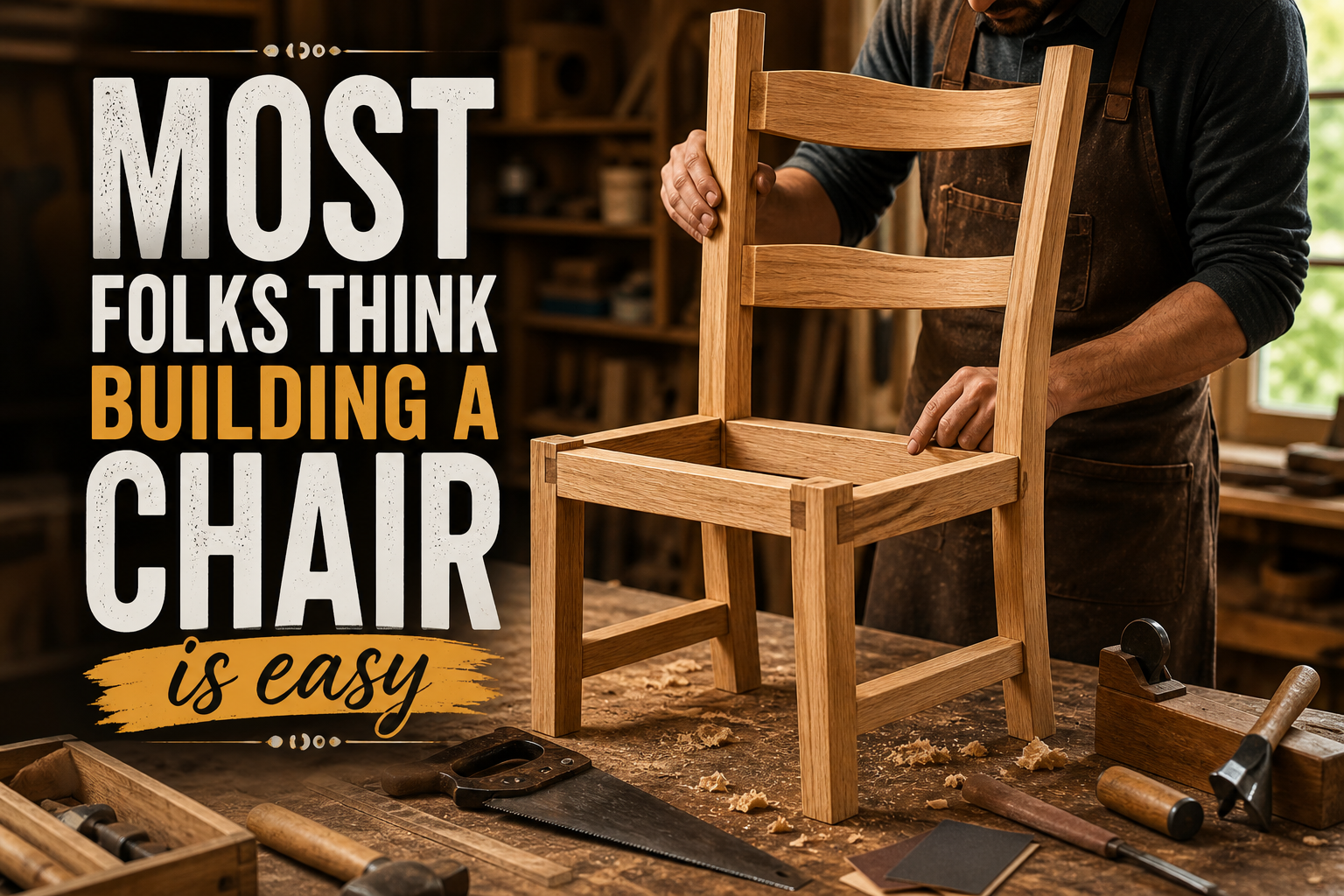
Most folks think building a chair
means cutting wood and tightening screws
Yet what really matters shows up only when someone sits down hard. Weight pushes down, sure. What happens next depends on choices made long before – the tilt of a leg, the way grain runs along a beam. Force moves quietly through unseen paths. Breakage? That comes when alignment fails, not just material strength. Sitting is testing without knowing.
Most handbooks open with “pick a layout
or “collect supplies.” Missing the moment before sawdust flies: watching. See how a person settles into stillness, how weight rolls from heel to toe, how spine drifts off center. Furniture breaks less from cracked timber, more from blueprints blind to motion – the shudder during recline, the torque while pivoting halfway down. Still drawings won’t show it. First move isn’t sizing planks. It’s tracking sway.
Four legs start the build. Their lengths might differ – intentionally. Across old-school techniques, like Japanese tansu or countryside European woodwork, you’ll find legs angled outward. The reason? Uneven ground demands balance, not symmetry. Final polish won’t fix this tilt – it’s planned from the beginning. Shape every post so the footprint stretches broader toward the rear. Out front, the two legs stay vertical. Back ones? They splay a little – five to seven degrees off center. That tilt helps stop it falling back when load moves unevenly.
Start with the seat frame. A pair of rails
– one up front, one at the rear – fit into slots cut in the leg wood. Hardwood cut on the quarter works best here. The reason lies beneath the surface: sawing it that way sets the grain at right angles to the flat side of the plank, helping it hold weight without crushing. Wood shifts with moisture. Quarter-sawn oak handles that shift more reliably than flat-sawn pieces. A mortise-and-tenon connection works well here, shaping the tenon to roughly one-third the rail’s depth. Apply adhesive to just part of the tenon surface. The opposite section stays free of glue. Movement happens naturally. Seasons change. Boards swell slightly in damp air. Locking the entire joint tight may lead to splits later on. Unbonded areas give space for tiny motions while keeping strength intact.
Next up is the seat – just a flat board or set of slats. Watch out for cupping if you go with solid wood. Warping can still happen long after it’s installed, even when the timber seems dry. Pick pieces where the grain stands straight and close together, going from front to back, that helps keep things stable. Start with countersunk screws instead of nails. Drill pilot holes two times wider than the screw to let wood shift slightly. Even smarter – try figure-eight fasteners hidden under the frame. The metal clips hold the seat free-floating, handling sideways force when someone drops into it or stands up suddenly.
From the start, backrests add twisting motion into play. Leaning shifts pressure down through the body until it reaches where shoulders press against wood. Many designs set vertical supports too near each other, locking them straight onto seating layers. Try placing twin bars wider apart, just beyond where hips end on either side. Link these high up using one crossbar – the headrail – shaped gently like a shallow hilltop to match mid-back contours. Slip long tenons through the crest rail before tapping wedges in from the top. As years pass, the wedge forces the joint tighter instead of letting it slip apart.
Out in cities across Pakistan, you might spot chairs made from bits people would normally toss away. Scaffolding scraps become frames, old tires turn into sitting pads when cut wide open. Even squashed cardboard, soaked in glue until hard, gets shaped into sturdy pieces. These odd combos stick around year after year, even in damp air that ruins most things. Rain hardly matters when what matters is just making it work. Looks take a back seat once you see how long they hold up. A sideways milk crate becomes a seat. Plain looking, yet it works just fine. Toughness shows up where you least expect – like an added wooden brace fixed at a slant on some pavement chai shops.
Most people care too much about surface looks when air movement counts more. Trapped dampness rots timber fast, oil finish or not. The base of a bench should never get fully blocked shut. Let moisture escape through bare wood. When color goes on top, skip coating what’s beneath. Even smarter: lift each leg just clear of ground level with tiny spacers for full breathability. Stays drier longer that way. Wet spots fade faster where wind passes.
How things go together changes how strong they turn out. Start with smaller parts like legs connected to stretchers before moving on to the seat structure, followed by the back section. Pressure from clamps should increase gently. Hurrying while gluing leads to problems down the line. Leave clamps in place through the night, regardless of quick-dry glue claims. Hidden stress inside wood fades only with time. Take them off too soon and pieces shift, joints slip out of position.
Here’s something often missed: how feet land on floor. When sitting loose, soles hardly ever lie flush down. Ankles get crossed, sometimes a leg slips back behind the other. That rail between the front legs? It needs to sit below nine inches high. Too tall and trouble starts. Over time, people might catch their toes underneath without noticing, slowly pulling up on the bar. That kind of pressure twists the joints out of place. Putting it lower means feet never reach it at all.
Start by testing things another way. From your usual seat, move left and right three dozen shifts. Ease into a soft back-and-forth rock a full ten rounds. Rise from sitting fast, do it five straight lifts. After each motion, scan all joints closely. Spot the smallest split appearing where nothing showed earlier. Fix them without delay.
A chair made right carries its flaws openly. Every piece of wood brings a different grain. Human hands never repeat exactly. The workshop shifts with seasons. Through it all, one thing holds: shape something strong enough to wobble slightly yet stay standing. Strength shows not in flawlessness but in lasting anyway. Time passes. People rest on it daily, never noticing how balance leans quietly on small, steady choices.
Twelve hours might pass before a newcomer finishes, moving step by step. Longer still when pauses fit between steps just right. Haste brings shaky joints, crooked lines, annoyance. Patience cannot be skipped, no matter the hurry. Trying again, tweaking each time, doing it over – that shapes skill.