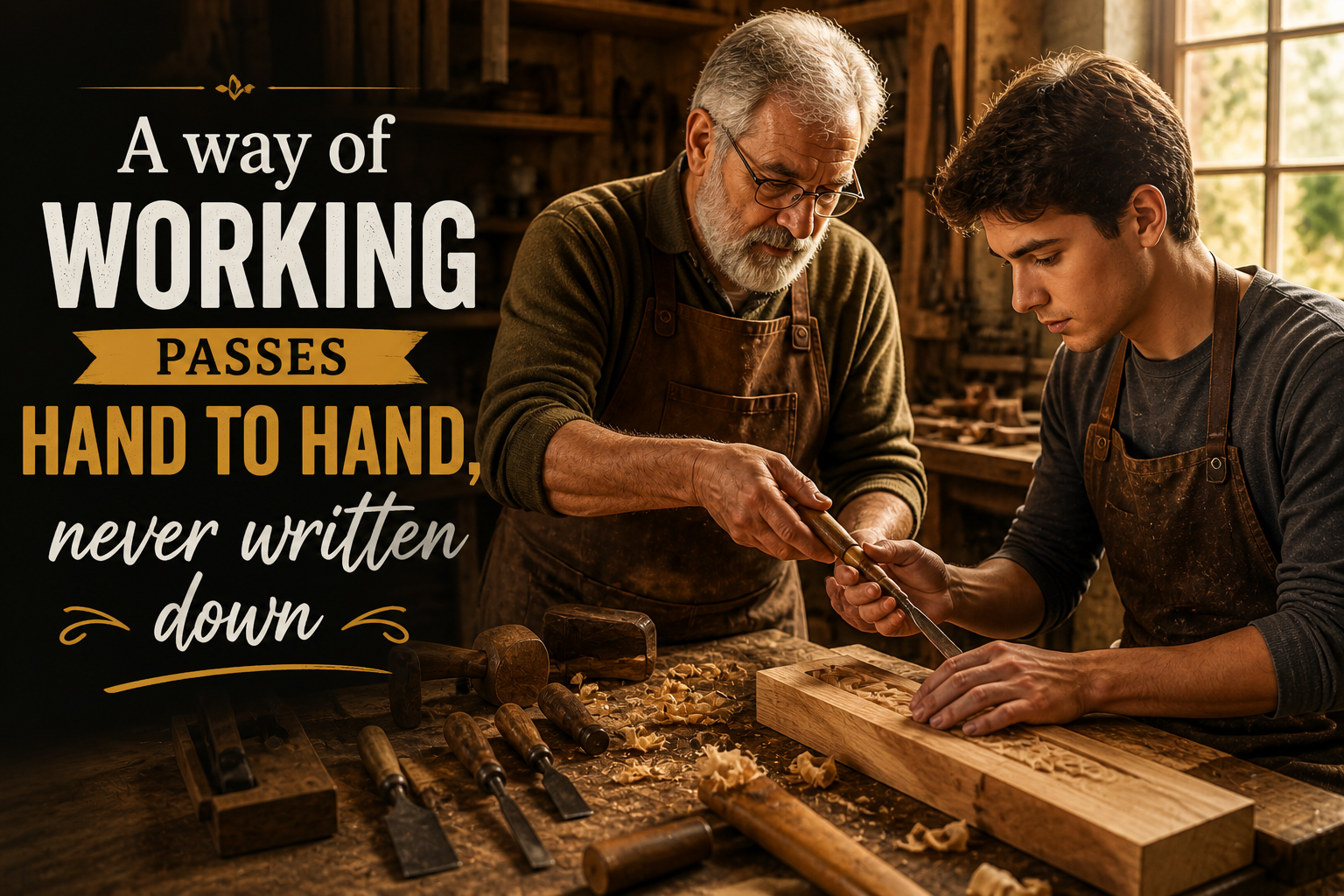
A way of working passes hand to hand, never written down
This kind of knowing grows in huts, yards, under trees – places without classrooms. Someone watches. Then tries. Mistakes shape skill more than rules ever could. Voice guides voice; gesture follows gesture. Wood speaks through splinters, resistance, grain. Learning hides in doing, not listing steps. Each cut teaches balance between force and patience. Memory holds what books ignore. Tradition breathes in repetition, not lectures. Hands recall what minds forget
A wooden door comes together slower than machines assume. What grows nearby matters more than any plan drawn on paper. When someone in a village near Multan speaks of triqa, they mean ways learned by watching hands work, not rules printed somewhere. Weather bends the wood, so people bend their methods too. Each cut answers what the moment allows. Tradition here breathes through doing, never stands still.
Wood choice comes first. Manuals mention teak, yet price keeps it rare in villages. Instead, locals pick trees such as Shisham Dalbergia sissoo, known for tight fibers and staying flat when dried. Judging good pieces means hands-on checks – knocking a log listens for hollow spots, eyes follow the line of grain, fingers trace around edge knots. Such skills grow slowly, passed down by doing rather than words.
After selection, the wood waits. Freshly felled trunks hold water, which means warping happens later if used early. Damp planks need time – weeks stretch into months when skies stay heavy. Boards rest apart, thin strips keeping gaps open between them so air moves through. He checks how light they feel now, or just counts days like others before him – doors built fast buckle when rains arrive.
After that, measuring begins. With basic tools like a crosscut saw, try square, and plane, the craftsman shapes rough parts: two upright stiles, upper and lower rails, possibly a middle rail when the door stands taller than four feet. Instead of nails or screws, classic construction leans on mortise-and-tenon connections. They resist everyday wear more effectively. Accuracy matters during cutting. If the tenon fits loosely, it weakens with use, leading to drooping – a flaw seldom found in factory-made flush doors built around particleboard centers.
Out comes the next step: getting panels ready. Solid wood works fine, yet frame-and-panel setups dominate areas with shifting weather. The panel slides into grooves carved in the frame, unglued on purpose so it can shift a bit when moisture levels rise or fall. A few makers sneak in small spaces by design. Decoration sometimes happens too, shaped gently with router planes – or, if power is nearby, spinning electric tools take over.
Start by putting pieces together loosely, checking how they match before any sticking happens. Once everything lines up just right, only then does anything get glued. Back in the day, craftsmen leaned on natural hide glue, warmed to make it work, and able to come apart cleanly if needed years down the road. These days, many shops choose PVA white glue instead – it costs less, goes on simpler, yet fights back harder when taken apart.
Pressure comes next. Instead of just holding pieces together, wooden clamps or metal F-clamps spread force across each joint. Squeeze too hard and the glue gets pushed out. Not enough pressure means spaces stay open. The clock starts ticking once glue goes on – PVA begins setting around half an hour. Once it firms up, leftover residue gets removed by scraping. Finishing touches come from hand planes or sandpaper, easing rough spots into flatness.
Hinges look different now. Back then, workers fastened pintle types using hand-forged iron strips driven into timber frames. These days, most people choose galvanized steel butt models instead. How high or low they go changes how well they work – eight inches above the base holds the bottom piece, while the top sits roughly five below the edge. Out of line parts rub or stick. Holes drilled first guide screws home – vital when working dense woods so cracks stay away.
Now comes the finish work. Wood left outside weathers fast when bare. Varnish keeps things clear, yet a blend of boiled linseed oil and turpentine shields lightly against moisture while deepening grain tone just a little. Thin layers, several of them, outperform one heavy coat. After one coat dries completely, only then does the next go on. Skipping grit work between layers might save minutes – wise hands see it costs strength later.
Even now, how it goes up still matters most. A frame sits true only when flat side to side, straight up down. Where bricks or stones form an opening, workers set metal rods that grip mortar joints tight. Nails through timber? They loosen slow as the ground beneath sinks unevenly. Upward tilt gets caught using bubble glass tools, then fixed by sliding thin wedges near hinge spots.
Most guides skip something key. How surroundings shape choices matters more than people think. Doors on the north get fewer rays compared to those on the south or west. That difference shows over time. Shaded entrances resist wear far better. Few mention how climate adjustment plays a role either. Wood that seems dry still shifts once on location. Days spent sitting where it will be used help ease tension after assembly.
Here’s something often missed how tightly a door fits its frame. About 2 to 3 millimeters of space should stay clear all the way around. Too little, and swelling wood can jam things shut when damp; too much, drafts sneak through along with bugs looking for shelter. Some carpenters test it by sliding thin paper pieces between surfaces – tugging gently till there’s just slight resistance each time.
Most simple models skip strong security parts. Only if asked do they include lock blocks – those thick bits hidden in the door’s edge. The act of boring holes for locks can harm strength when those supports aren’t there. Glass panels show up a lot these days but tend to leak heat if the border setup fails.
Out on the plains, door frames stretch taller than you might expect. Seven-foot openings pop up where ceilings sit high and folks stand tall. Move inland, where barns dot the fields, doors swell to swallow wheelbarrows whole. Tools trundle through these gaps, sacks of grain follow close behind.
Out here, scraps find new jobs. Leftover pieces turn into tool grips, tiny sticks for lighting fires, or kindling stacked by the stove. Mix sawdust with glue, you get cheap panels in factories – though most backyard woodworkers just toss it in a burn pile.
Most people overlook sound. Because they’re built light, hollow-core doors let noise slip through like smoke. In contrast, solid wood ones absorb it without effort. Quiet then turns into something useful – space where others can’t hear you breathe.
Most handbooks skip the upkeep stuff. Every year, a fresh coat of oil keeps the finish from breaking down. Hinges that wiggle need tightening now and then. Cracks in the jamb’s mortar show up during inspections.
Left or right – that silent detail sneaks into door design. Swings adapt to entryway layout along with how people move through them. Put it backwards, reaching the handle twists your body wrong. Getting the hinge side right matters before screws meet wood.
Out of sight, work splits itself between ages. Younger ones tend to gather supplies. Older hands take charge of adjustments. Learning moves without words. Rare questions pop up here and there. Mistakes get fixed before they’re named.
Out here, one fixed method never fits – circumstances shift too much. Different gear shows up every time. Abilities inch forward, not leap. Power availability decides which machines can run at all. In cities, prebuilt pieces pop up often; remote spots? Every step done by hand, start to finish.
One size never fits all here. Still, the steps stay fixed: pick first, then air-dry, slice after that, link pieces next, build it up, smooth it out, set into place last.
Maybe the real point is this: those ways keep going, not because they beat factory systems, yet because they bend when things go off track. They shift. If deliveries fail, these approaches still hold up.
Most young people skip this kind of work now. Schools rarely point students toward hands-on training. Instead, public initiatives push things like welding or IT.
Still, when roads crumble or prices block paths, people remember. Out of need, not longing.
A crafted wood door stands as a quiet sign of lasting things. Not built fast, nor flawless – just shaped well enough by small changes over time. What holds it together is not precision, but repeated fixing. Each shift answers wear, each repair extends use. It lasts because it adapts, not because it resists.
What holds it up isn’t alignment with worldwide benchmarks, instead a fit with nearby conditions – what’s on hand, who’s around, what must be done now.